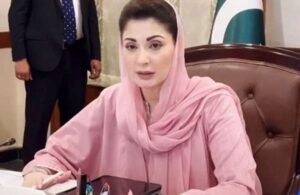



Lahore: Senior Punjab Minister Maryam Aurangzeb met a World Bank delegation on October 2 to discuss Punjab’s digital transformation, agriculture, industrial development, technology and investment agenda. The meeting covered high-speed internet expansion, private-sector fibre networks, Kisan Card, super seeders, irrigation improvements, STEP financing, e-commerce and Nawaz Sharif IT City.
On digital connectivity, the meeting was told that PITB is working with the World Bank on faster internet access. This is backed by the Connected Punjab Programme, for which the World Bank approved $70 million in June 2026. The wider $278 million programme aims to expand broadband through private investment, improve digital public services and support AI-enabled government systems. Importantly, this should not be described as a confirmed province-wide 5G mobile-network rollout; the official World Bank programme primarily focuses on broadband and fibre connectivity.
The supplied Rs300 billion figure also needs clarification. Punjab’s Sanati Taraqi & Export Promotion (STEP) programme involves about Rs193 billion in financing/support designed to mobilise around Rs300 billion in private-sector investment. So Rs300 billion is not simply a government STEP budget.
Agriculture discussions included Kisan Card, super seeders, modern machinery and improving canal-water delivery to tail-end farmers. Maryam Aurangzeb also said the provincial government is targeting up to a 30% increase in major crop production over three to five years; this is a government target, not an achieved result.
The meeting also discussed AI, software development, e-commerce and Nawaz Sharif IT City. The IT City itself is an officially recognised project and remains under construction. The APP report, however, does not establish that a new “AI Office” was created during this particular meeting.