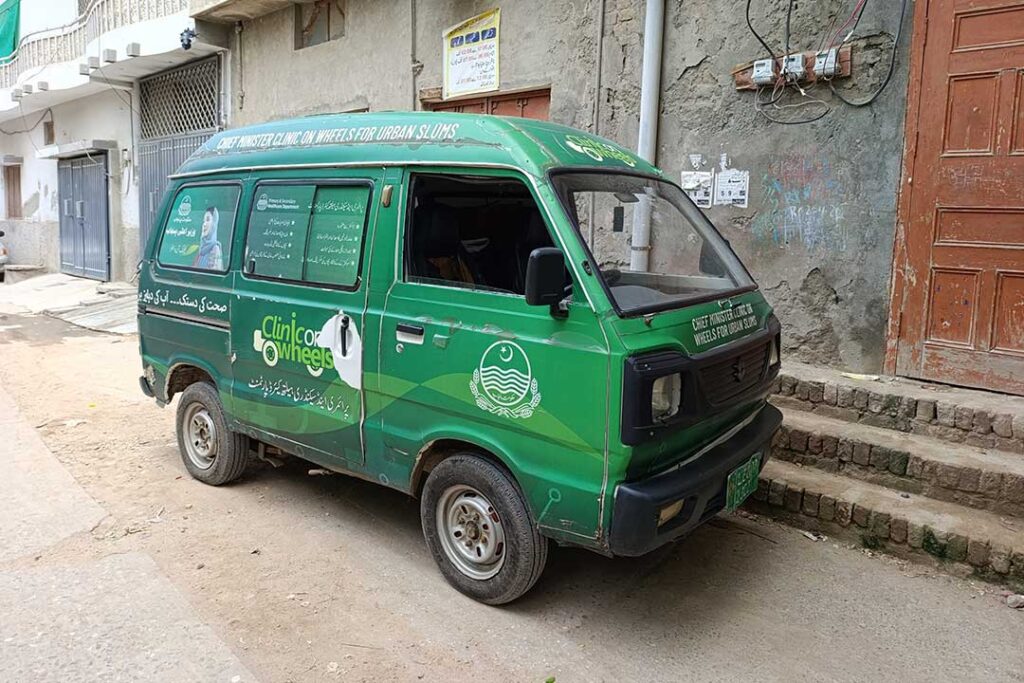
Lahore: The Punjab government says its 911 Clinics on Wheels have now provided healthcare services to around 30 million patients, marking another major expansion of the province’s mobile healthcare programme. The 911-clinic network itself is independently documented: when Phase II was launched in June 2025, official reporting confirmed 911 mobile clinics and more than 10 million patients treated at that stage.
At a latest health-sector review chaired by Punjab Chief Minister Maryam Nawaz Sharif, the government also announced plans to introduce Digital Medical Boxes capable of supporting tests such as ultrasound, blood sugar, CBC and ECG. The proposed boxes would include camera connectivity for teleconsultation, while smartphone-linked portable ultrasound devices are also planned. These are newly announced measures, not yet province-wide operational services.
The government further decided to strengthen around 300 Maryam Nawaz Hospitals, formerly Rural Health Centres, into more complete secondary-level healthcare facilities. This builds on an already documented programme to upgrade RHCs under the Maryam Nawaz Hospital model; Punjab Health Department documents describe the conversion of RHCs into more functional secondary-care facilities through performance-based management.
The meeting also proposed telemedicine centres for seasonal and common illnesses, allowing patients to consult doctors through video calls and be referred directly to the relevant hospital, ward or laboratory. Separately, Punjab’s health department has already moved toward 24-hour digital monitoring of public facilities, while the province has been building digital health profiles through its Community Health Inspectors programme.
According to the latest government briefing, more than 40,000 doctors and allied health staff have been recruited or engaged across the province, including medical officers, women medical officers, consultants, cardiologists, LHVs and support staff. The briefing also says Chief Minister Maryam Nawaz directed the creation of an emergency pool of doctors and medical superintendents, provision of a new CT scanner in every district, and introduction of a “Hospital of the Month” performance system.